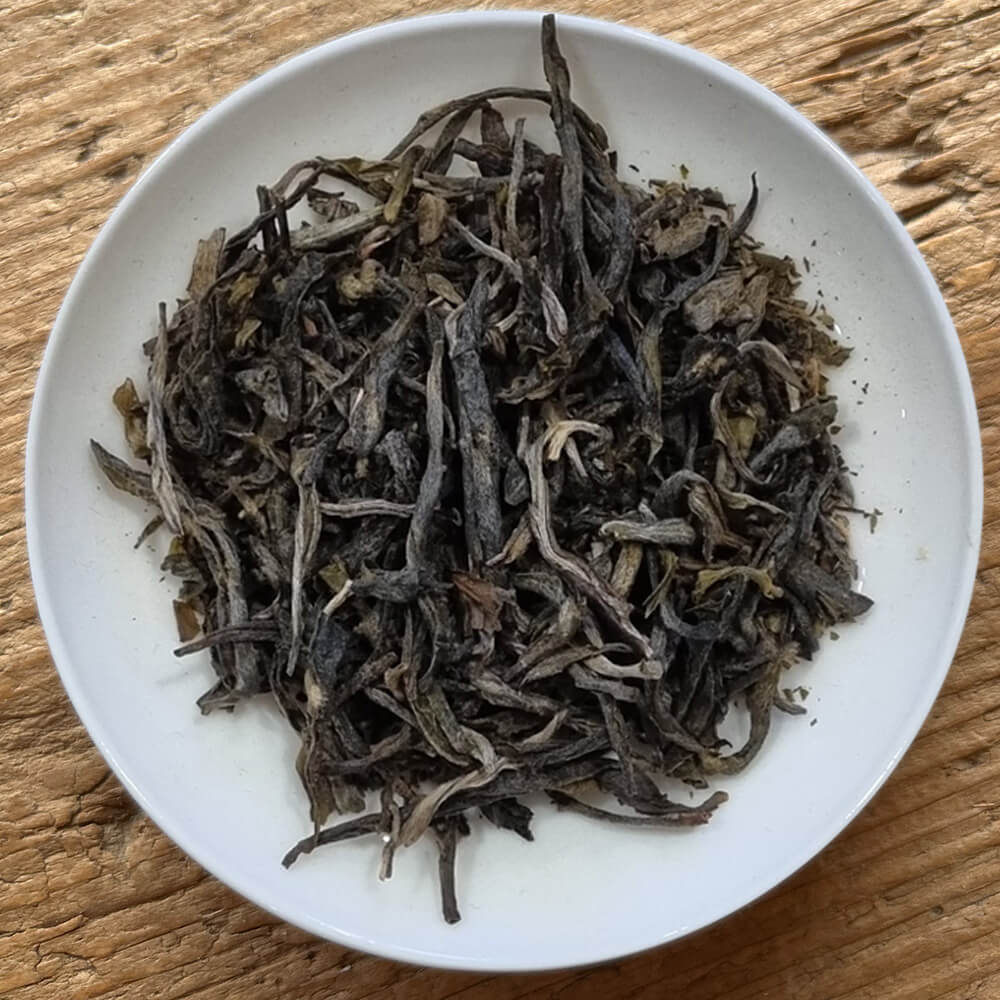
Huoshan Huangya yellow tea is a tea of the highest quality, which in the past was served at the imperial court. To prepare it best, a Gaiwan is recommended, in order to savor the high quality, fragrance, and its delicious taste that will unfold infusion after infusion. The most significant characteristic is its delicate chestnut flavor, combined with a sugary sweetness that lingers on the palate for a long time. Tasting - Sight and smell. The leaves of Huoshan Huangya yellow tea are thin, straight, and elongated, with a color ranging from sage green to olive green and a good presence of buds. Once wet, the leaves release very sweet scents of white sugar and honey, delicate vegetal hints, and a more herbaceous note of fresh hay. In the cup, the liquor is a soft yellow tending to pink, with a light and silky body, without bitterness or astringency. Tasting notes GONG FU CHA. The first infusion of Huoshan Huangya yellow tea has a distinct sweetness that remains at the back of the throat, and delicate hints of fresh broad beans and peas. With the second infusion, soft hints of boiled chestnut emerge, and the sweetness evolves into more vegetal notes of baby spinach and buttered carrots. The third infusion further intensifies the chestnut note; fruity hints of pear and a note of vanilla also appear, while the finish is fresh and slightly herbaceous. TO THE WESTERNER. At the first sip of Huoshan Huangya yellow tea, one can already taste the sweetness that characterizes it: among the most distinctive hints, boiled chestnut, pear, dried figs, and white sugar emerge. The intermediate notes are vegetal and very delicate, like steamed carrots, peas, and fresh bamboo shoots. There is even a note that recalls the soft sweetness of white bread, before a consistently sugary and slightly fruity finish with long persistence. Place of origin. Bai Ma Jiang Peak, Da Bie Shan mountains, Huo Shang county, Anhui, China. Production. Yellow tea (huang cha) is a rare variety of tea harvested in spring. It is produced similarly to green tea but involves an additional step: after cooking, the leaves are stacked one on top of the other while still damp and warm, and wrapped in a cloth or paper, an operation that promotes non-enzymatic oxidation (a kind of caramelization) and gives the leaves a slightly yellow coloration. This process makes the tea develop a sweeter and less herbaceous taste than what is found in green tea. Ingredients: yellow tea. Preparation of Huoshan Huangya yellow tea. It is recommended to use glass or porcelain accessories. Rinse the teacup and teapot with hot water. Use about 3 grams of tea leaves (2 teaspoons) for every 200 ml of water. For the first infusion, leave the leaves in hot water at 75°C for 3 minutes and gradually increase the time by 30 seconds for subsequent infusions. Storage: it is recommended to store in a cool, dry, and dark place.
Price VAT included







Huoshan Huangya yellow tea is a tea of the highest quality, which in the past was served at the imperial court. To prepare it best, a Gaiwan is recommended, in order to savor the high quality, fragrance, and its delicious taste that will unfold infusion after infusion. The most significant characteristic is its delicate chestnut flavor, combined with a sugary sweetness that lingers on the palate for a long time. Tasting - Sight and smell. The leaves of Huoshan Huangya yellow tea are thin, straight, and elongated, with a color ranging from sage green to olive green and a good presence of buds. Once wet, the leaves release very sweet scents of white sugar and honey, delicate vegetal hints, and a more herbaceous note of fresh hay. In the cup, the liquor is a soft yellow tending to pink, with a light and silky body, without bitterness or astringency. Tasting notes GONG FU CHA. The first infusion of Huoshan Huangya yellow tea has a distinct sweetness that remains at the back of the throat, and delicate hints of fresh broad beans and peas. With the second infusion, soft hints of boiled chestnut emerge, and the sweetness evolves into more vegetal notes of baby spinach and buttered carrots. The third infusion further intensifies the chestnut note; fruity hints of pear and a note of vanilla also appear, while the finish is fresh and slightly herbaceous. TO THE WESTERNER. At the first sip of Huoshan Huangya yellow tea, one can already taste the sweetness that characterizes it: among the most distinctive hints, boiled chestnut, pear, dried figs, and white sugar emerge. The intermediate notes are vegetal and very delicate, like steamed carrots, peas, and fresh bamboo shoots. There is even a note that recalls the soft sweetness of white bread, before a consistently sugary and slightly fruity finish with long persistence. Place of origin. Bai Ma Jiang Peak, Da Bie Shan mountains, Huo Shang county, Anhui, China. Production. Yellow tea (huang cha) is a rare variety of tea harvested in spring. It is produced similarly to green tea but involves an additional step: after cooking, the leaves are stacked one on top of the other while still damp and warm, and wrapped in a cloth or paper, an operation that promotes non-enzymatic oxidation (a kind of caramelization) and gives the leaves a slightly yellow coloration. This process makes the tea develop a sweeter and less herbaceous taste than what is found in green tea. Ingredients: yellow tea. Preparation of Huoshan Huangya yellow tea. It is recommended to use glass or porcelain accessories. Rinse the teacup and teapot with hot water. Use about 3 grams of tea leaves (2 teaspoons) for every 200 ml of water. For the first infusion, leave the leaves in hot water at 75°C for 3 minutes and gradually increase the time by 30 seconds for subsequent infusions. Storage: it is recommended to store in a cool, dry, and dark place.