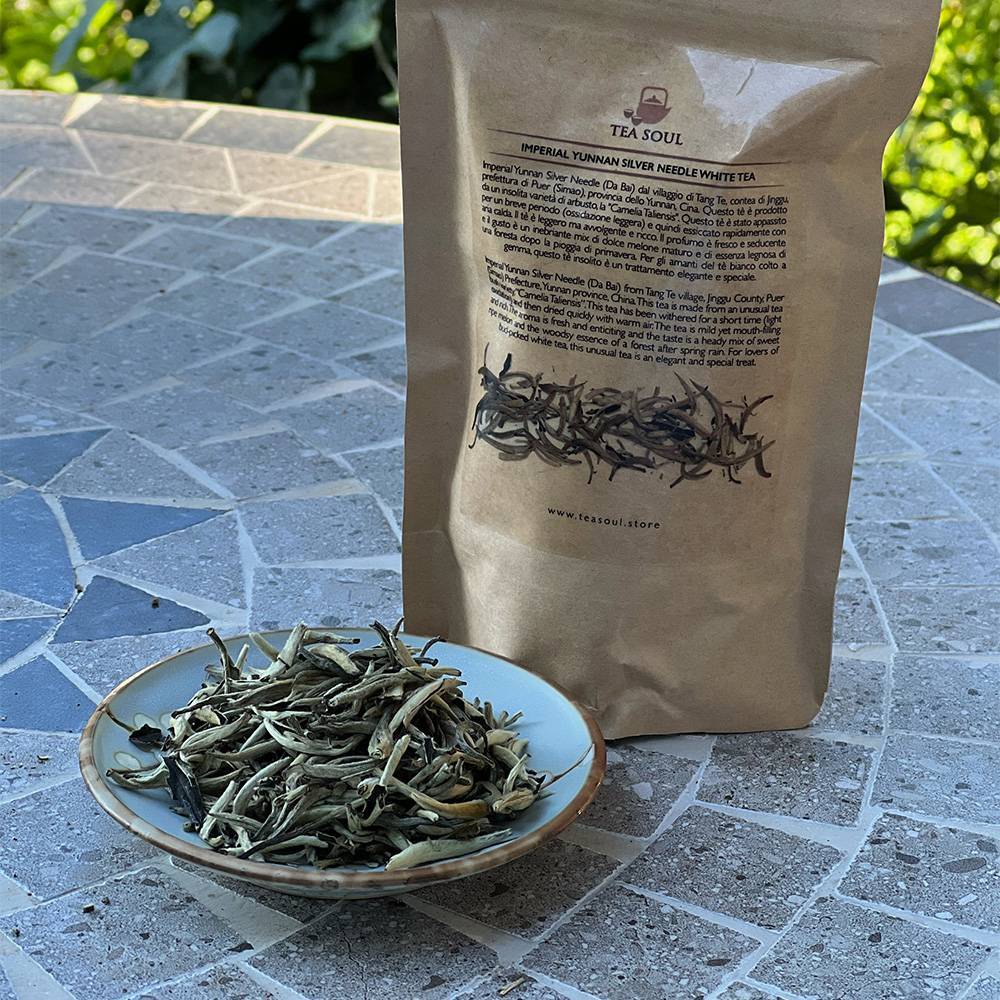
Silver Needle white tea is produced from an unusual variety of bush, Camellia Taliensis. This tea has been withered for a short period (light oxidation) and then quickly dried with hot air. It is a meditation tea: due to its delicacy, it is indeed difficult to pair with food. For lovers of gem white tea, it is an elegant tea with a fresh aroma and a sweet taste, which at times resembles the woody essence of a forest after spring rain. The buds of which Silver Needle white tea is made are large and silver in color, covered with soft fuzz (bai hao) that makes them shine like velvet. Once infused, the buds have floral, sweet aromas, with a herbaceous and fresh hint of hay. In the cup, the tea appears clear, pale yellow with pinkish reflections. The body is light and silky: even when brewed for long periods, this tea will never produce astringency or bitterness. The first infusion of Silver Needle white tea yields an extremely sweet and delicate liquor, with fresh floral notes and a light hint of hay. With the second infusion, the sweet notes take on a more defined flavor reminiscent of sweet clover honey. The herbaceous note is always present but never turns into astringency, providing freshness and fragrance to the liquor. With the third infusion, notes of dried flowers and fruity hints of dehydrated apricot emerge. A first sip of Silver Needle white tea offers an extremely delicate and floral attack on the palate: it recalls wildflowers and dried flowers. The tea then takes on the sweet flavor of acacia honey and freshness given also by a very light herbaceous note of hay. Fruity notes of melon and apricot can be perceived, fading into a sugary finish: the persistence is indeed sweet and reprises the honey notes already perceived earlier. Tang Te Village, Jinggu County, Puer Prefecture (Simao), Yunnan Province, China. The best productions come from the first harvests, which generally take place between the end of March and the beginning of April: for the production of Silver Needle white tea, only the leaf and buds are harvested. The ideal moment is a sunny morning, when the sun is high enough to have dried the residual moisture on the buds. To fully appreciate the exquisite form of Silver Needle white tea, a transparent glass accessory is ideal. Heat the teapot first with boiling water and then pour 200 ml of water (80°C) over about 3 grams of tea. The tea buds will begin to float on the surface of the teapot. After 5 minutes, some buds will sink to the bottom of the teapot while others will remain on top. All the buds will then rise vertically performing a magical dance. A delightful spectacle to enjoy before drinking the tea. It is recommended to store Silver Needle white tea in a cool, dry, and dark place.
Price VAT included







Silver Needle white tea is produced from an unusual variety of bush, Camellia Taliensis. This tea has been withered for a short period (light oxidation) and then quickly dried with hot air. It is a meditation tea: due to its delicacy, it is indeed difficult to pair with food. For lovers of gem white tea, it is an elegant tea with a fresh aroma and a sweet taste, which at times resembles the woody essence of a forest after spring rain. The buds of which Silver Needle white tea is made are large and silver in color, covered with soft fuzz (bai hao) that makes them shine like velvet. Once infused, the buds have floral, sweet aromas, with a herbaceous and fresh hint of hay. In the cup, the tea appears clear, pale yellow with pinkish reflections. The body is light and silky: even when brewed for long periods, this tea will never produce astringency or bitterness. The first infusion of Silver Needle white tea yields an extremely sweet and delicate liquor, with fresh floral notes and a light hint of hay. With the second infusion, the sweet notes take on a more defined flavor reminiscent of sweet clover honey. The herbaceous note is always present but never turns into astringency, providing freshness and fragrance to the liquor. With the third infusion, notes of dried flowers and fruity hints of dehydrated apricot emerge. A first sip of Silver Needle white tea offers an extremely delicate and floral attack on the palate: it recalls wildflowers and dried flowers. The tea then takes on the sweet flavor of acacia honey and freshness given also by a very light herbaceous note of hay. Fruity notes of melon and apricot can be perceived, fading into a sugary finish: the persistence is indeed sweet and reprises the honey notes already perceived earlier. Tang Te Village, Jinggu County, Puer Prefecture (Simao), Yunnan Province, China. The best productions come from the first harvests, which generally take place between the end of March and the beginning of April: for the production of Silver Needle white tea, only the leaf and buds are harvested. The ideal moment is a sunny morning, when the sun is high enough to have dried the residual moisture on the buds. To fully appreciate the exquisite form of Silver Needle white tea, a transparent glass accessory is ideal. Heat the teapot first with boiling water and then pour 200 ml of water (80°C) over about 3 grams of tea. The tea buds will begin to float on the surface of the teapot. After 5 minutes, some buds will sink to the bottom of the teapot while others will remain on top. All the buds will then rise vertically performing a magical dance. A delightful spectacle to enjoy before drinking the tea. It is recommended to store Silver Needle white tea in a cool, dry, and dark place.