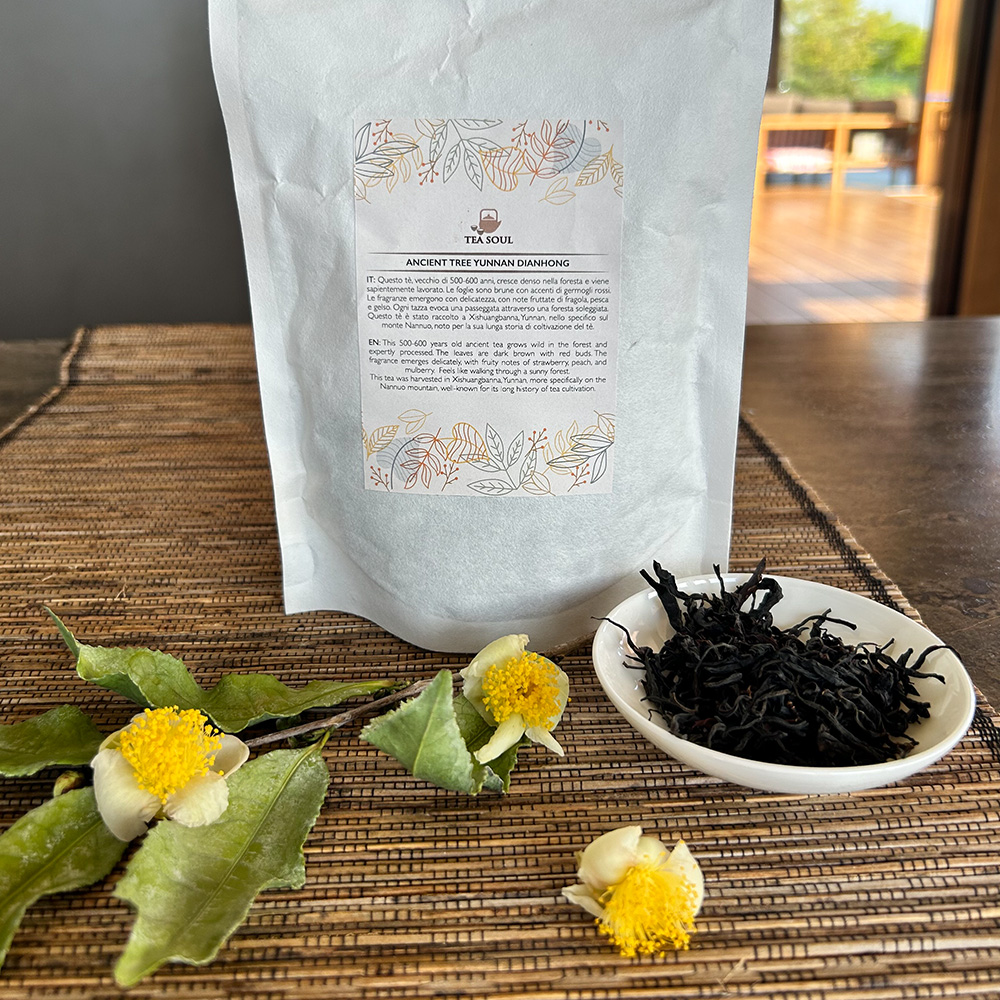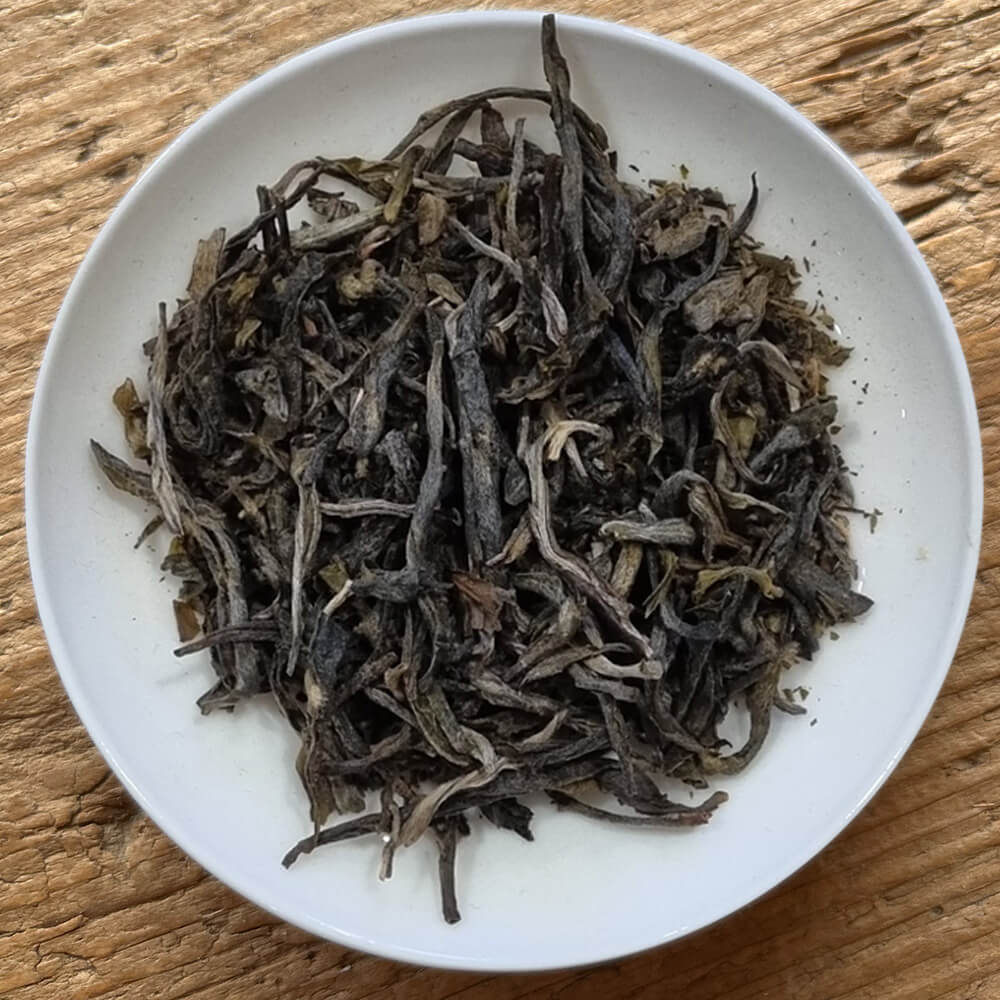






The smoky red tea Lapsang Souchong is an alternative version compared to the traditional eponymous red tea originating from the Fujian region in China. The significant geographical difference between this product and its Chinese counterpart leads to a slightly different type of leaf and processing compared to the classic standard. Observing this tea, in fact, one can notice that the leaves used here are slightly larger than those produced by the camellias in Fujian. Besides this difference, there is another factor related to processing that will influence the flavor of the infusion of these leaves. According to tradition, in fact, Lapsang Souchong should be smoked using pine wood fumes, but in this Taiwanese case, other evergreens that are easier to source locally have been used. The aforementioned differences have such an impact on the flavor profile of this tea that the tasting experience becomes different from that obtainable with traditional Chinese red Lapsang Souchong tea. In particular, the infusion, on the first sips, will not immediately reveal its smoky character but will start with light citrus acid notes. This acidity will gradually intensify as the smoky character and a very pleasant woody tone emerge without any astringent sensation. Finally, in the aftertaste, there will be a slightly pungent vegetal flavor due to the Taiwanese cultivar that will slightly remind one of rosemary. Place of origin: Taiwan. Production: After harvest, the leaves are left to wither in the sun for a certain time, depending on the producer, before moving on to the folding phase. The leaves are then folded and rolled so that the juices inside can mix, initiating the oxidation process. For this tea, the leaves are exposed to a gradual increase in temperature during oxidation, and once the leaf reaches its typical brown color, smoking the product is done using wood charcoal. After several cooking cycles and a few days of resting, the tea is ready to be consumed. Preparation: We strongly recommend infusing this tea using the traditional Chinese method (gong fu cha) to best enjoy these leaves. Following this preparation, you can use 5 grams of leaves (about 3 teaspoons) in a gaiwan of about 100 ml to obtain multiple infusions with different flavors. After a quick rinse of the leaves in water at 95°C, a first infusion of 10 seconds can be done, and then, maintaining the water at the same temperature, the infusion time can be increased by 5 seconds each time compared to the previous infusion (10 - 15 - 20…). This tea has a longevity of about 7 infusions. For a classic preparation according to the Western style, we recommend 2 grams of leaves (about 1 teaspoon) in a 150 ml cup with water at 95°C for a one and a half minute infusion. The tea can be filtered for greater ease during tasting, and also the infusion times mentioned above are purely indicative, so adjustments can be made based on personal taste. It is recommended to store in a cool and dry place away from direct sunlight.

The smoky red tea Lapsang Souchong is an alternative version compared to the traditional eponymous red tea originating from the Fujian region in China. The significant geographical difference between this product and its Chinese counterpart leads to a slightly different type of leaf and processing compared to the classic standard. Observing this tea, in fact, one can notice that the leaves used here are slightly larger than those produced by the camellias in Fujian. Besides this difference, there is another factor related to processing that will influence the flavor of the infusion of these leaves. According to tradition, in fact, Lapsang Souchong should be smoked using pine wood fumes, but in this Taiwanese case, other evergreens that are easier to source locally have been used. The aforementioned differences have such an impact on the flavor profile of this tea that the tasting experience becomes different from that obtainable with traditional Chinese red Lapsang Souchong tea. In particular, the infusion, on the first sips, will not immediately reveal its smoky character but will start with light citrus acid notes. This acidity will gradually intensify as the smoky character and a very pleasant woody tone emerge without any astringent sensation. Finally, in the aftertaste, there will be a slightly pungent vegetal flavor due to the Taiwanese cultivar that will slightly remind one of rosemary. Place of origin: Taiwan. Production: After harvest, the leaves are left to wither in the sun for a certain time, depending on the producer, before moving on to the folding phase. The leaves are then folded and rolled so that the juices inside can mix, initiating the oxidation process. For this tea, the leaves are exposed to a gradual increase in temperature during oxidation, and once the leaf reaches its typical brown color, smoking the product is done using wood charcoal. After several cooking cycles and a few days of resting, the tea is ready to be consumed. Preparation: We strongly recommend infusing this tea using the traditional Chinese method (gong fu cha) to best enjoy these leaves. Following this preparation, you can use 5 grams of leaves (about 3 teaspoons) in a gaiwan of about 100 ml to obtain multiple infusions with different flavors. After a quick rinse of the leaves in water at 95°C, a first infusion of 10 seconds can be done, and then, maintaining the water at the same temperature, the infusion time can be increased by 5 seconds each time compared to the previous infusion (10 - 15 - 20…). This tea has a longevity of about 7 infusions. For a classic preparation according to the Western style, we recommend 2 grams of leaves (about 1 teaspoon) in a 150 ml cup with water at 95°C for a one and a half minute infusion. The tea can be filtered for greater ease during tasting, and also the infusion times mentioned above are purely indicative, so adjustments can be made based on personal taste. It is recommended to store in a cool and dry place away from direct sunlight.
Price VAT included