





The symbiotic mezze maniche come from so-called symbiotic agriculture, a cutting-edge cultivation process where the soil is no longer treated with pesticides, agrochemicals, or subjected to additional fertilization, but is inoculated with entirely natural products such as symbiotic fungi, bacteria, and yeasts. The enrichment of the microbial communities in the soil (microbiome) near the roots of the wheat allows the plant to absorb high amounts of nutrients and microelements in total absence of chemical treatments. Micro-organisms enter into symbiosis with the plant, defending it from pathogens and preserving soil biodiversity, providing natural protection that does not require the use of chemical products that over time reduce soil biodiversity. The symbiotic exchange (plant/micro-organisms) allows the cereal to produce nutraceutical substances that are well known to be healthy for humans and their diet.
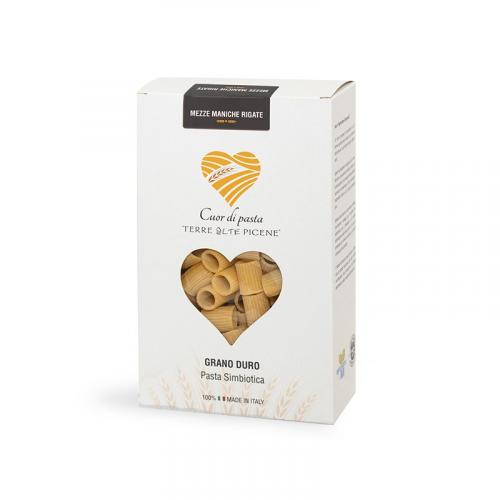
The symbiotic mezze maniche come from so-called symbiotic agriculture, a cutting-edge cultivation process where the soil is no longer treated with pesticides, agrochemicals, or subjected to additional fertilization, but is inoculated with entirely natural products such as symbiotic fungi, bacteria, and yeasts. The enrichment of the microbial communities in the soil (microbiome) near the roots of the wheat allows the plant to absorb high amounts of nutrients and microelements in total absence of chemical treatments. Micro-organisms enter into symbiosis with the plant, defending it from pathogens and preserving soil biodiversity, providing natural protection that does not require the use of chemical products that over time reduce soil biodiversity. The symbiotic exchange (plant/micro-organisms) allows the cereal to produce nutraceutical substances that are well known to be healthy for humans and their diet.
Shipping costs £40.63, free over £252.30
Price VAT included